A Q&A with David Hughes about Transcendental Meditation and how it can benefit your physical and mental health…
-

- 24 February 2023
There’s a large Transcendental Meditation -TM- centre on the north side of Skelmersdale, and the successful Maharishi Free School on the edge of town has a couple of short TM sessions each day for pupils and staff. Hundreds of people from all walks of life in Skelmersdale have learned TM over the years – but what exactly is it?
What is TM, and where does it come from?
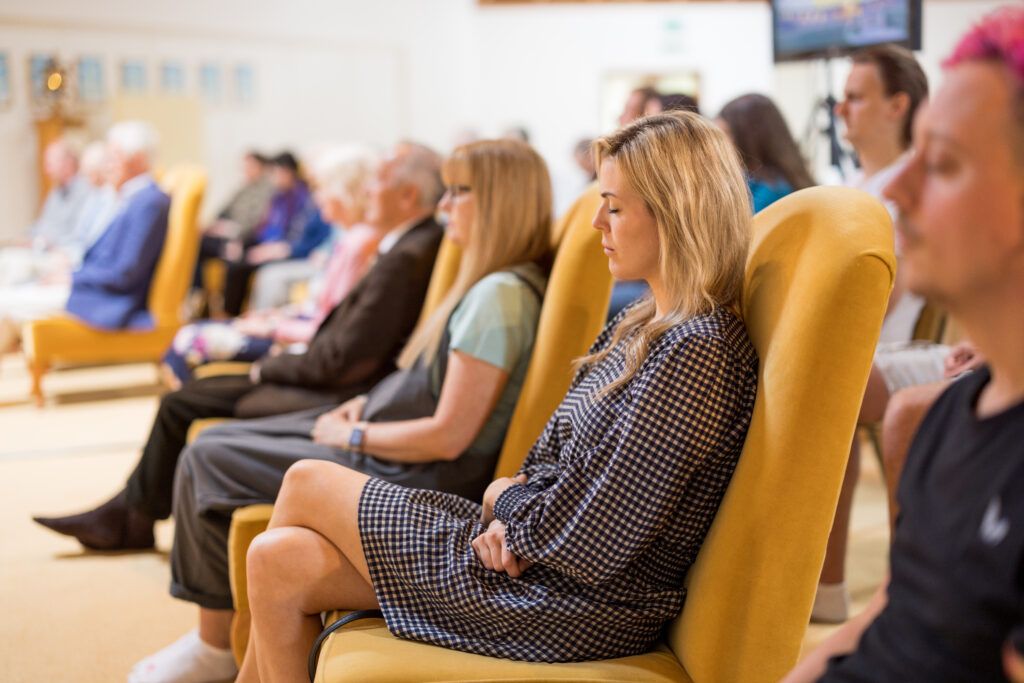
TM is a simple technique which gives deep rest to the body and greater alertness to the mind. It doesn’t involve any concentration, effort or belief and is not a philosophy, religion or lifestyle. TM is practised sitting comfortably with eyes closed. It was introduced by Maharishi Mahesh Yogi in 1957 and has been learned by 10 million people worldwide.
What does it do?
The unique state of rest to mind and body during TM allows tiredness and stress to be released in a natural way, giving greater energy, more alertness, and increased happiness and success in daily life.
Is there any scientific proof of the benefits?
Yes. Hundreds of peer-reviewed studies, published in leading scientific and medical journals around the world have measured the benefits of TM. Results have included improvements in heart health, reduction of high blood pressure, reduced cortisol (the ‘stress hormone’), improved memory, decreased insomnia, and reduced burnout.
Is it difficult to learn?
No. TM is taught in a standardised course of four two-hour lessons by highly experienced TM teachers. It doesn’t need any intellectual effort or years of study. Because it’s effortless, TM is easy to learn at any age.
I can’t keep my mind still. Is that a problem?
No. With TM, you don’t need to get rid of thoughts. The mind settles down in a natural way to a state of quiet wakefulness, and the body gains deep rest.
Do I have to chant or sit cross-legged?
No. You just sit comfortably with your eyes closed. You could meditate on a bus or train. It’s silent meditation, so nobody knows you’re meditating.
Do I have to go to the Maharishi Dome to meditate?
No. The Dome is available for those who would like to meditate there, but most people do their TM practice at home – or wherever is convenient – for two twenty-minute sessions a day. The Dome is mostly used for the practice of an advanced course – the TM-Sidhi programme – which is used by a couple of hundred people in Skelmersdale, some of whom practise it in a group at the Dome twice a day. It’s a bit like a meditating Bannatynes if you like!
How can I find out more about TM?
William and Janet Ayliffe are the local TM teachers for Skelmersdale. They’ve been teaching here for 40 years and give regular free introductory talks going into more detail about what TM is and what it does,
with no obligation to take a course. Their contact details are janet.ayliffe@tm.org, 07974396666.
Websites:
“ TM is a simple, effortless way to ‘dive within,’ to experience an ocean of pure consciousness, pure creativity, pure knowingness. It’s a unique experience, but also very familiar – it’s your own Self.” -film maker David Lynch.
“(TM) is the ultimate work tool to me. It’s like you have a phone and someone hands you the charger and you go ‘just try plugging this in and watch what your phone will do now.” – Jerry Seinfeld
“Stress is a contributory cause of many illnesses. It is often regarded as the modern epidemic. Good rest is a natural way for the body to maintain good health. TM gives extra deep rest and is highly recommended for its life-enhancing values.”
Dr William Weir, Consultant, Infectious Diseases.